
01Planning and heritage consent
Listed building consent drawings for London's listed houses
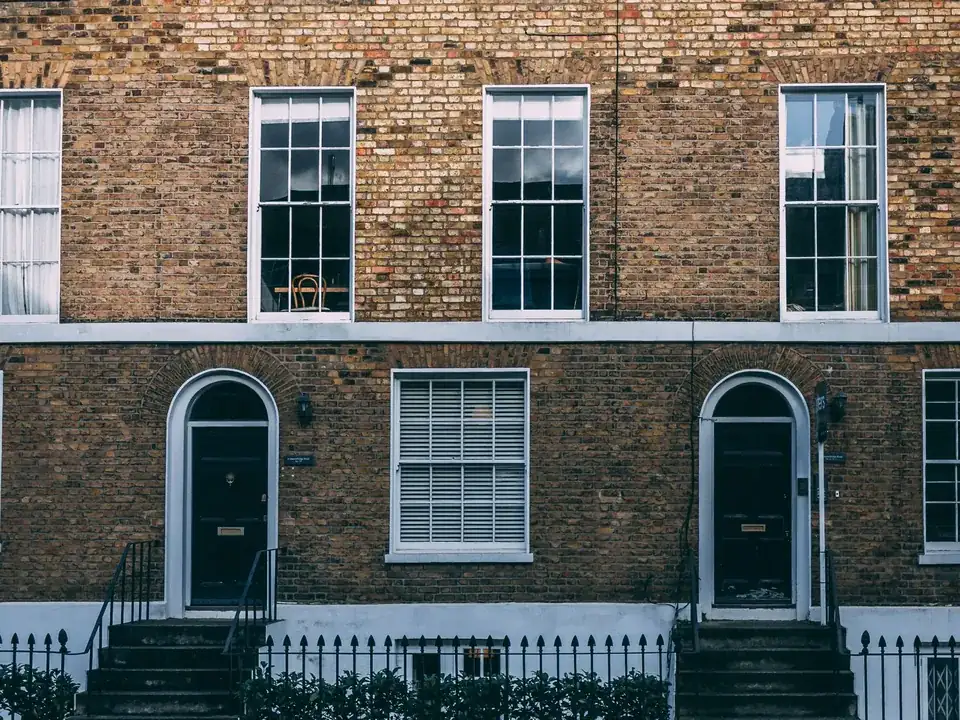
Listing protects a house inside and out, so the drawings answer a different question from a planning set: what is original, what is changing, and what does each change do to the building's significance? Our chartered architectural technologists (MCIAT) survey the fabric, draw the existing and proposed work to that question, and coordinate a heritage consultant for the statement where one is needed.
Fixed quote after a free constraints check
- MCIAT chartered architectural technologists
- £2m professional indemnity insurance
- LABC Partnered
- ICO registered
02The brief
What listing changes about a drawing set
A listed house is judged as a whole, so the set records existing fabric as carefully as it records the proposal. National policy sets the standard: Proposals affecting heritage assets need an assessment of significance (including setting) proportionate to the asset's importance. The weight in the decision is also set nationally: Substantial weight to the conservation of designated heritage assets.
Listing reaches into the garden too. Garden buildings within the curtilage of a listed building are not permitted development, so a garden room beside a listed house needs its own consent route before it needs a builder.

03The record
The national rules in figures
| Measure | Value | Period | Source |
|---|---|---|---|
| NPPF Aug 2026, policy HE5(1) | Proposals affecting heritage assets need an assessment of significance (including setting) proportionate to the asset's importance | No period | gov.uk |
| NPPF Aug 2026, policy HE6(1) | Substantial weight to the conservation of designated heritage assets | No period | gov.uk |
| Class E, para E.1(g) | Garden buildings within the curtilage of a listed building are not permitted development | No period | legislation.gov.uk |
| Concessions: application types with no current fee - Listed Building Consent | 0 GBP | No period | ribblevalley.gov.uk |
| Planning (Listed Buildings and Conservation Areas) Act 1990 s9(1), s9(4) | Works without consent: up to 6 months' imprisonment or a fine on summary conviction; up to 2 years or a fine on indictment | No period | legislation.gov.uk |
| Works to listed buildings must preserve significance, setting and features; historic fabric and original features to be preserved. | preserve significance and fabric | No period | rbkc.gov.uk, RBKC Local Plan 2024, Policy CD5 A-D, p236 |
| Removal of important internal or external features resisted without clear and convincing justification. | clear and convincing justification | No period | rbkc.gov.uk, RBKC Local Plan 2024, Policy CD5 C and F, p236 |
| Listed building works must retain and repair fabric, not harm structure, and confine extensions to less significant parts | extensions to less significant parts | No period | haringey.gov.uk, Haringey Development Management DPD (adopted July 2017), Policy DM9 part F, p.22 |
| Listed building guidance predates current policy; read with adopted policy and PPG; pre-application advice recommended | pre-application advice advised | No period | westminster.gov.uk, Listed buildings (council web page), page text |
| Listed building entries | 4,015 list entries (Historic England, within the LPA boundary) | No period | planning.data.gov.uk |
| Listed building entries | 1,350 list entries (Historic England, within the LPA boundary) | No period | planning.data.gov.uk |
| Listed building entries | 1,971 list entries (Historic England, within the LPA boundary) | No period | planning.data.gov.uk |
| Listed building consents granted (PS2) | 95 % granted | 2025 Q2 to 2026 Q1 (1 Apr 2025 to 31 Mar 2026) | assets.publishing.service.gov.uk |
A blank value means the figure has not been published, not that there are none. Check your own address with the council.
- Barking and Dagenham
- Barnet
- Bexley
- Brent
- Bromley
- Camden
- City of London
- Westminster
- Croydon
- Ealing
- Enfield
- Greenwich
- Hackney
- Hammersmith & Fulham
- Haringey
- Harrow
- Havering
- Hillingdon
- Hounslow
- Islington
- Kensington and Chelsea
- Kingston upon Thames
- Lambeth
- Lewisham
- Merton
- Newham
- Redbridge
- Richmond upon Thames
- Southwark
- Sutton
- Tower Hamlets
- Waltham Forest
- Wandsworth
04The drawing
The listed building consent route
How works to a listed building are consented, from the first survey to the decision.
- A What the council weighs
- Proposals affecting heritage assets need an assessment of significance (including setting) proportionate to the asset's importance
- B The weight given to conservation
- Substantial weight to the conservation of designated heritage assets
- C Works without consent
- Works without consent: up to 6 months' imprisonment or a fine on summary conviction; up to 2 years or a fine on indictment
05The detail
Consent and planning permission are separate applications
Listed building consent covers the effect on the building's character. Planning permission covers the use and appearance of the land. A single scheme often needs both, for instance a roof change that also needs mansard roof drawings or a lower floor that needs basement conversion drawings.
The councils do not charge for the consent application itself, which the national fee table prices at nothing. Our own fee is a fixed quote after the free constraints check, and any planning application made alongside it has its own council fee.
How councils write the test
Kensington and Chelsea asks that works preserve significance and fabric, and it resists the loss of important features without clear and convincing justification. Haringey's policy goes to the plan of the house: listed works should confine extensions to less significant parts.
Westminster is candid that its listed building guidance is older than its current policy. Its own file says to read the two together and to seek pre-application advice, and we build that conversation into the programme.
The scale of London's listed housing
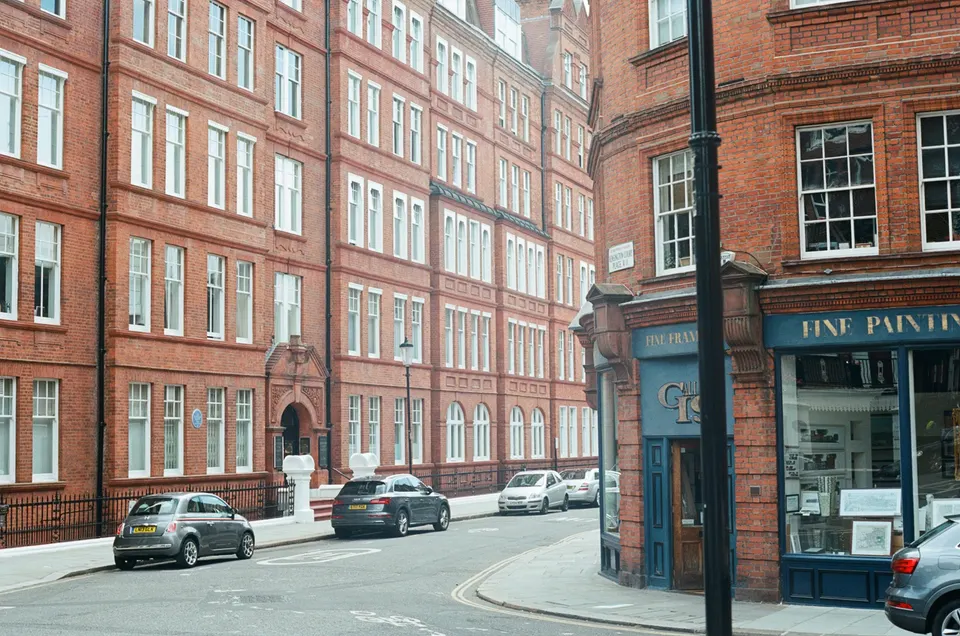
Historic England records 4,015 list entries in Westminster, with 205 at Grade I and 373 at Grade II*. Kensington and Chelsea has 1,350, Camden 1,971 and Haringey 289.
Decision records give a sense of volume rather than odds. In its latest published year Camden decided 402 applications to alter or extend a listed building and granted 95% of them, while Westminster decided 1,553 and granted 90.5%. They describe past decisions, not your application.
Starting work too early
Works without consent: up to 6 months' imprisonment or a fine on summary conviction; up to 2 years or a fine on indictment. The offence attaches to the work, so the order of events matters: consent first, then the build.
For a listed house in Westminster, the neighbourhood guides to architectural drawings in Mayfair and Marylebone's period streets set out the conservation area and council guidance that sit around it.
06The papers
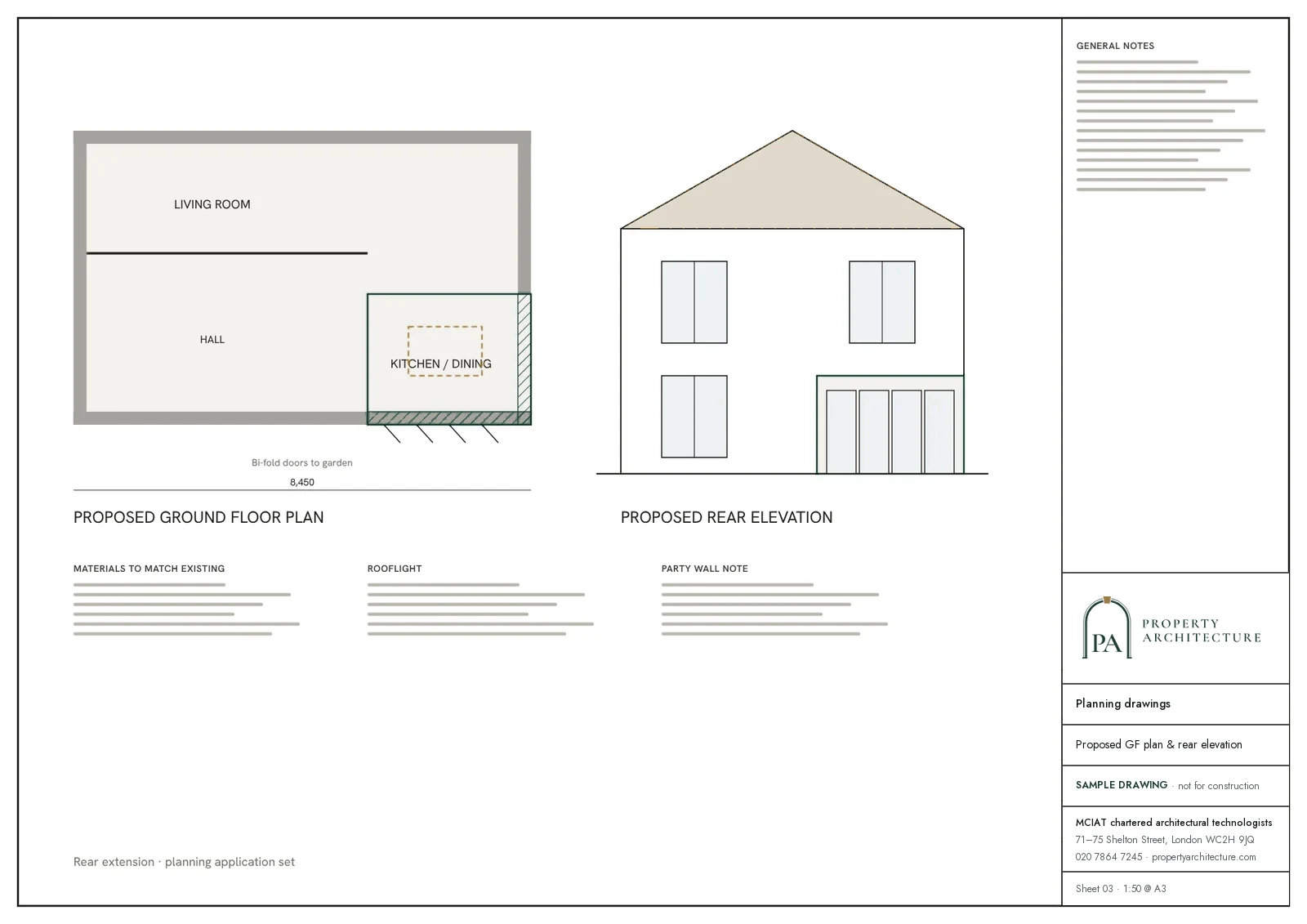
What the drawings rest on
 Flat conversions & change of use
07Correspondence
Questions
Does work inside a listed house need consent?
Listing covers the whole building, interior included, so internal changes that affect its character need consent. Send us the address and we read the list entry before telling you which rooms and features it concerns.
What do I pay the council, and what do I pay you?
Nothing goes to the council for the consent application itself, because the national table sets no fee for it. We quote a fixed fee after a free constraints check, because it depends on how many rooms and elevations the work touches. A planning application alongside has a separate council fee.
Can I build a garden room beside a listed house?
Only through the right application. Garden buildings within the curtilage of a listed building are not permitted development. We check the curtilage of your house and draw the building for the route it needs.
What if work has already started without consent?
Works without consent: up to 6 months' imprisonment or a fine on summary conviction; up to 2 years or a fine on indictment. Stop the work, keep photographs of what exists, and send them to us so we can advise on the next step.
08Further reading
Where we prepare listed building consent drawings
London
- Listed building consent drawings in Barking and Dagenham
- Listed building consent drawings in Barnet
- Listed building consent drawings in Bexley
- Listed building consent drawings in Brent
- Listed building consent drawings in Bromley
- Listed building consent drawings in Camden
- Listed building consent drawings in City of London
- Listed building consent drawings in Westminster
- Listed building consent drawings in Croydon
- Listed building consent drawings in Ealing
- Listed building consent drawings in Enfield
- Listed building consent drawings in Greenwich
- Listed building consent drawings in Hackney
- Listed building consent drawings in Hammersmith & Fulham
- Listed building consent drawings in Haringey
- Listed building consent drawings in Harrow
- Listed building consent drawings in Havering
- Listed building consent drawings in Hillingdon
- Listed building consent drawings in Hounslow
- Listed building consent drawings in Islington
- Listed building consent drawings in Kensington and Chelsea
- Listed building consent drawings in Kingston upon Thames
- Listed building consent drawings in Lambeth
- Listed building consent drawings in Lewisham
- Listed building consent drawings in Merton
- Listed building consent drawings in Newham
- Listed building consent drawings in Redbridge
- Listed building consent drawings in Richmond upon Thames
- Listed building consent drawings in Southwark
- Listed building consent drawings in Sutton
- Listed building consent drawings in Tower Hamlets
- Listed building consent drawings in Waltham Forest
- Listed building consent drawings in Wandsworth
09Sources
Sources and dates
- gov.uk, retrieved
- legislation.gov.uk, retrieved
- ribblevalley.gov.uk, retrieved
- legislation.gov.uk, retrieved
- rbkc.gov.uk, retrieved
- haringey.gov.uk, retrieved
- westminster.gov.uk, retrieved
- planning.data.gov.uk, retrieved
- planning.data.gov.uk, retrieved
- planning.data.gov.uk, retrieved
- assets.publishing.service.gov.uk, retrieved
- planning.data.gov.uk, retrieved
Licences
- Contains public sector information licensed under the Open Government Licence v3.0.
- Contains OS data © Crown copyright and database right 2026.
- Contains Historic England data © Historic England 2026. Contains Ordnance Survey data © Crown copyright and database right 2026.
Send us the address of your house.
We look up the conservation area, listing and Article 4 position, then reply with a fixed fee. A message before 3pm is answered the same working day.